
"raising seedlings"
400 article(s) found
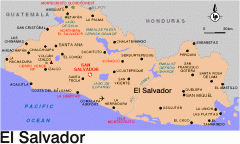
Coffee Manor introduction: what's the difference between the three Hope Manors in El Salvador and Colombia?
Professional baristas Please follow the Coffee Workshop (Wechat official account cafe_style) to introduce the Hope Estate of Guatamala, Panama and Mexico last time. There are also a lot of farmland called Hope in El Salvador. This time we will take a look at the Hope Manor of the Magaa and Pacas families. The other is the Colombian Caf Granja La Esperanza that many people know.

The income of Yunnan farmers is decreasing year by year. The plight of Yunnan small-grain coffee, please cherish every cup of coffee.
Professional coffee knowledge exchange more coffee bean information Please follow the coffee workshop (Wechat official account cafe_style) is another year's harvest season, Yunnan coffee is generally a bumper harvest. Fresh red and green fruits hang all over the branches, and coffee enters the harvest season in Yunnan at the end of November. According to the report of Industry and Economic observation, the income of Yunnan farmers has decreased year by year, and the price this year is about 30% lower than that of the same period last year. Kanongle
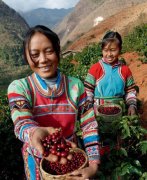
Coffee Bean Workshop in Baoshan, Yunnan
In Baoshan City, Yunnan Province, people divide the climate change in the year by the rainy season and the dry season. It is a quiet and sunny afternoon. Kapok trees sort out their branches and leaves in the warm spring wind. It will soon fill the whole courtyard with the fragrance of marshmallow. Tian Daihe decided whether or not to go to the kindergarten in Lujiang Town according to his own mood.

Stop cutting down coffee trees! If your coffee doesn't taste good, you're so sorry to Kanong.
Professional coffee knowledge exchange more coffee bean information Please follow the coffee workshop (Wechat official account cafe_style) is another year's harvest season, Yunnan coffee is generally a bumper harvest. Fresh red and green fruits hang all over the branches, and coffee enters the harvest season in Yunnan at the end of November. According to the report of Industry and Economic observation, the income of Yunnan farmers has decreased year by year, and the price this year is about 30% lower than that of the same period last year. Kanongle

Nicaraguan coffee producing area Java coffee beans lemon tree manor javanica coffee beans brewing flavor
Professional coffee knowledge exchange more coffee bean information Please follow the coffee workshop (Wechat official account cafe_style) Lemon Tree owner Irwin's father accidentally saved the once endangered Java coffee variety in a charity, so what happened in the middle? In this article, let's talk about the story between lemon tree manor and Java coffee varieties. Front Street Coffee Lemon

Description of Colombian Coffee Flavor introduction to the treatment methods of Grinding degree in producing areas of Colombian Coffee
In 1864, Jubal A. Early led Confederate troops to occupy parts of Montgomery County for a short time and attack the District of Columbia. On July 11, Confederate troops attacked Rockville Pike (MD-355), New Cut Road (now Viers Mill Road MD-586) via Rockville and Wheaton to Fo, which is only five miles from the White House in the District of Columbia.

Are Colombian coffee beans grown in the Andes? Introduction to the description of brand taste and flavor
Are Colombian coffee beans grown in the Andes? Introduce coffee is the pride of Colombians, Colombians like to talk about a few things, in addition to their football, which was once among the best in the world, is the coffee they are proud of. Drinking coffee in Colombia is a kind of enjoyment, not only essential three times a day, but also full of streets and alleys.

Colombian Santa Rita Manor Coffee with Gump in Acid: grindability, Price, Taste, introduction to the producing areas
The main varieties of Colombian coffee are small grains of coffee. Plants are small trees or large shrubs, 5-8 m tall, usually much branched at base; old branches gray-white, nodes dilated, young branches glabrous, compressed. Leaves thinly leathery, ovate-lanceolate or lanceolate, 6-14 cm long and 3.5-5 cm wide, tip long acuminate, acuminate part 10-15 mm long, base cuneate or slightly obtuse, rarely rounded, entire or

The planting Environment of Coffee Bean in Colombia
The pure taste of Colombian coffee comes from Colombia's natural environment with the most favorable conditions for coffee growth. But beyond that, it is inseparable from the hard work of local growers. In Colombia, coffee cultivation has reached 1.07 million hectares, there are about 302000 coffee plantations in the country, and 30 to 40 per cent of the rural population depends directly on coffee production. Columby

Planting Environment of Coffee species in Colombia
Species Morphology Editing Colombian Coffee Plant Morphology Colombian Coffee Plant Morphology (10 pieces) Colombian coffee is mainly small grain coffee. Plants are small trees or large shrubs, 5-8 m tall, usually much branched at base; old branches gray-white, nodes dilated, young branches glabrous, compressed. Leaves thinly leathery, ovate-lanceolate or lanceolate, 6-14 cm long, 3.5-5 cm wide, apex

A brief introduction to the cultivation of slightly fruity tin tin card boutique coffee beans, geographical location, climate and altitude
Yunnan coffee was planted on a large scale in the mid-1950s, with a planting scale of 4000 hectares at one time. By the end of 1997, the planting area of coffee in the province had reached 7800 hectares. At present, the planting area of the province accounts for 70% of the national area, and the output accounts for 83% of the whole country. Yunnan coffee has established the dominant position in China in terms of planting area and coffee bean production. Yunnan coffee should be distinguished by planting.

A brief introduction to the History and Culture of the Origin and Development of Yunnan small Coffee
Yunnan has a long history of growing coffee and has a unique climate advantage. Yunnan small grain coffee has the characteristics of strong but not bitter, fragrant but not greasy, slightly sour and so on. According to the International Coffee Organization, Yunnan small-grain coffee is similar to Colombian small-grain coffee in quality, and its products are highly competitive in the market. At present, 95% of China's coffee raw materials are produced in Yunnan. Therefore, Yunnan's coffee industry is responsible for

Colombia Coffee Region Flavor Taste Introduction Lazmus Manor
Colombia coffee varieties are mainly small coffee. Plants are small trees or large shrubs, 5-8 meters high, usually multi-branched at the base; old branches are gray, nodes expand, young branches glabrous, compressed. Leaves thinly leathery, ovate-lanceolate or lanceolate, 6-14 cm long, 3. 5 -5 cm wide, apex long acuminate, acuminate part 10-15 mm long, base cuneate or slightly obtuse, rarely rounded, entire or rounded

Planting Environment and species Morphology of Colombian Coffee
The pure taste of Colombian coffee comes from Colombia's natural environment with the most favorable conditions for coffee growth. But beyond that, it is inseparable from the hard work of local growers. In Colombia, coffee cultivation has reached 1.07 million hectares, there are about 302000 coffee plantations in the country, and 30 to 40 per cent of the rural population depends directly on coffee production. Columby

Colombian Coffee Flavor Manor introduction to Lazmus Manor
The main varieties of Colombian coffee are small grains of coffee. Plants are small trees or large shrubs, 5-8 m tall, usually much branched at base; old branches gray-white, nodes dilated, young branches glabrous, compressed. Leaves thinly leathery, ovate-lanceolate or lanceolate, 6-14 cm long and 3.5-5 cm wide, tip long acuminate, acuminate part 10-15 mm long, base cuneate or slightly obtuse, rarely rounded, entire or

Coffee planting History of Coffee introduction and expansion in China in the early stage (5)
1. From the first peak period of the development of China's coffee industry (1952-1961) to the late 1940s, according to recorded figures, there are 2173.33 hectares of rubber plantations in Hainan Island, with a total of 867600 rubber trees, with an annual output of 199,000 tons of dry rubber, and more than 300,000 coffee plants. the annual output of coffee beans is 1 ton. According to a survey in the early 1950s, there was a large amount of coffee left in Fushan area of Chengmai County, with a total of 70,000.

Grinding scale of Colombian Huilan Coffee Bean introduction to the description of taste and flavor in the producing area
The pure taste of Colombian coffee comes from Colombia's natural environment with the most favorable conditions for coffee growth. But beyond that, it is inseparable from the hard work of local growers. In Colombia, coffee cultivation has reached 1.07 million hectares, there are about 302000 coffee plantations in the country, and 30 to 40 per cent of the rural population depends directly on coffee production. Columby

General situation of Coffee Bean Workshop in Baoshan, Yunnan Province
In Baoshan City, Yunnan Province, people divide the climate change in the year by the rainy season and the dry season. It is a quiet and sunny afternoon. Kapok trees sort out their branches and leaves in the warm spring wind. It will soon fill the whole courtyard with the fragrance of marshmallow. Tian Daihe decided whether or not to go to the kindergarten in Lujiang Town according to his own mood.

mesocarp fleshy, sweet Colombia Hope Manor Coffee Flavor Taste
The pure flavor of Colombia coffee comes from the natural environment of Colombia, which has the most favorable conditions for coffee growth. But beyond that, it is inseparable from the hard work of local growers. In Colombia, coffee is cultivated on 1.07 million hectares, there are about 302,000 coffee plantations in the country, and 30 to 40 per cent of the rural population depends directly on coffee production. Colombia
The History of Coffee introduction and expansion in China in the early stage (5)
1. From the first peak period of the development of China's coffee industry (1952-1961) to the late 1940s, according to recorded figures, there are 2173.33 hectares of rubber plantations in Hainan Island, with a total of 867600 rubber trees, with an annual output of 199,000 tons of dry rubber, and more than 300,000 coffee plants. the annual output of coffee beans is 1 ton. According to a survey in the early 1950s, there was a large amount of coffee left in Fushan area of Chengmai County, with a total of 70,000.